

Immediate access to pathology results: empowerment or anxiety?

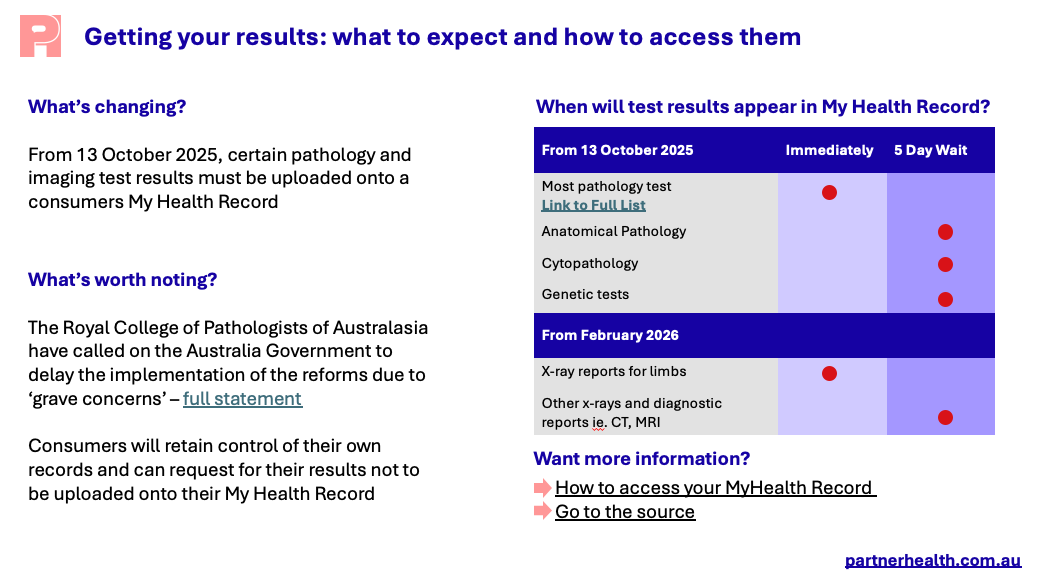
On 13 October 2025, the Australian Digital Health Agency (ADHA) confirmed that the immediate release of pathology results was now live, allowing consumers to view their results directly in their My Health Record profile 👉 More info here
For me, this marks another small but significant step in the slow and sometimes uncomfortable shift of power back to consumers.
For too long, health information has been held tightly within the system, shared about consumers, not with them. This change recognises something fundamental: people have a right to access their own health information, in real time.
The mixed response
Many in the health system, particularly GPs, have expressed concern about these changes including risks to continuity of care, increased consumer anxiety and misinterpreting results.
The Royal Australian College of General Practitioners (RACGP), in its 2023 submission on the proposed changes, stated:
“Maintaining the 7-day rule allows consumers to have access to their health information, albeit with a small delay that allows their GP or other clinician to discuss their results with them. We do not consider the benefit of real-time access to results outweighs the potential harm of consumers misinterpreting results or receiving unfortunate results with no immediate clinical support.”
It’s a valid concern. But it also raises an important question: are we giving consumers enough credit?
consumers are already managing their own care…and are stressed!
What’s often overlooked is that many consumers already act as their own care co-ordinators, particularly those living with chronic or complex conditions. They co-ordinate their own specialists, medications and test results. Having immediate access to test results could make this already demanding role just a little easier.
I once sat in a meeting where health researchers said they would “contact consumers’ GPs to get a full picture of their health.” I suggested that if you truly want the full picture, talk to the one person who’s there for every test, every symptom and every conversation: the consumer.
I also appreciate that consumers may interpret negative results which causes distress. However, the current common experience of receiving a vague phone call or text message asking you to “come in to discuss your results” can be equally anxiety-inducing, especially when it might require more out-of-pocket fees and a longer wait time to see their GP.
The opportunity ahead
Now that results are accessible in real time, it’s no longer enough to warn consumers to stay away from “Dr Google” or AI. Those ships have well and truly sailed. The question is: how do we adapt communication and support both clinicians and consumers in this new environment?
As digital literacy grows and AI tools make interpreting results easier, this conversation will keep evolving. The real opportunity isn’t just about access; it’s about how we communicate, how we prepare people for results and how we build trust.
Giving people access to information about their own bodies is a powerful starting point. It’s also another step towards re-imagining what support looks like in a truly consumer-centred health system.